
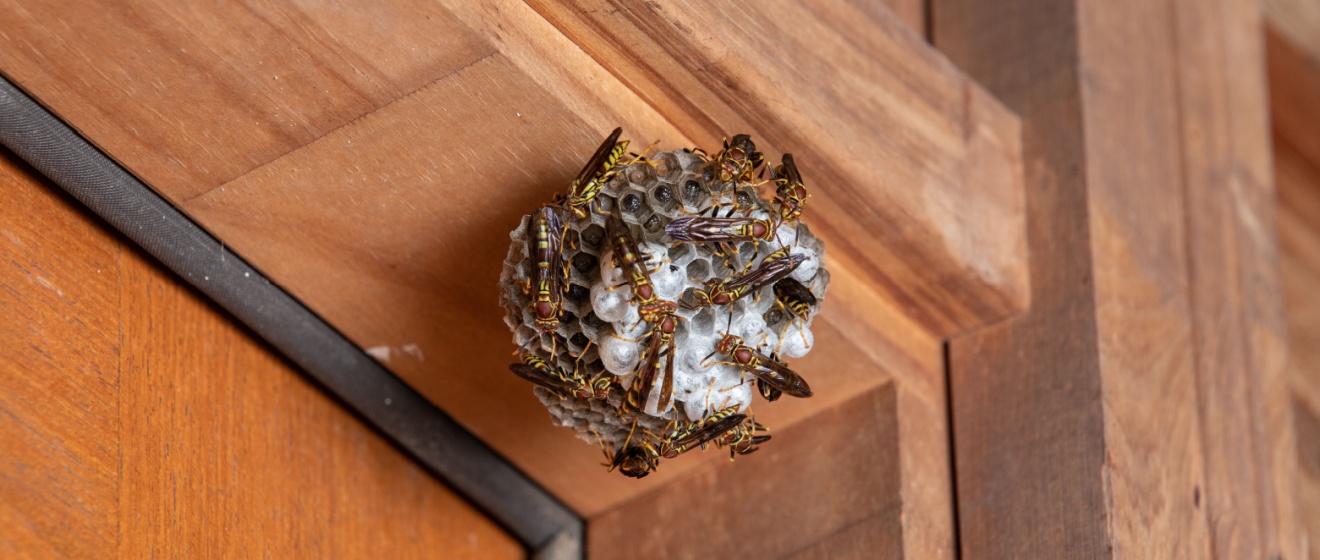
A wasp or hornet nest is often discovered by accident, whether through a startled glance while trimming hedges or a sting while reaching for a porch railing. Knowing where these insects tend to build around a Lebanon property makes it easier to spot a nest early, before it grows large enough to become a serious hazard, which is where professional stinging insect removal makes the biggest difference.
Eaves, Soffits, and Roof Overhangs
Paper wasps favor sheltered, elevated spots that stay dry and protected from wind, which makes eaves, soffits, and roof overhangs a common building site. These nests start small, often no larger than a golf ball, and can be easy to miss until they grow to the size of a dinner plate over the course of a season. Because these locations sit directly above doorways, walkways, and patios, a growing nest here often ends up in close, repeated contact with people entering and leaving the home.
Attics and Wall Voids
Enclosed, undisturbed spaces like attics and wall voids appeal to yellowjackets and, less commonly, to paper wasps looking for extra protection from weather. A nest built inside a wall void can be difficult to detect from outside the home, sometimes revealed only by a faint buzzing sound, a small number of insects finding their way indoors through a gap, or a section of wall or ceiling that feels warm to the touch.
Ground Nests in Lawns and Garden Beds
Yellowjackets frequently nest underground, often taking over an abandoned rodent burrow or a natural cavity in the soil. These ground nests can be nearly invisible from a distance, with only a small entrance hole in the grass marking the colony below. Because of this, ground nests are commonly disturbed by lawn mowers, garden tools, or simply someone walking across the yard, which can trigger a defensive response from dozens of wasps at once.
Tree Branches, Shrubs, and Hollow Trees
Bald-faced hornets and European hornets both favor locations among trees and shrubs, though in different ways. Bald-faced hornets build their large, gray, teardrop-shaped nests out in the open, attached to branches where they are visible once the leaves begin to fall in autumn. European hornets, by contrast, prefer the shelter of hollow trees, tucking their nests out of sight inside a trunk or large limb, which can make them harder to notice until activity around the opening becomes obvious.
Sheds, Garages, and Outdoor Structures
Detached structures like sheds, garages, and playhouses offer many of the same conditions wasps look for near the main house: sheltered corners, undisturbed surfaces, and gaps where a nest can begin unnoticed. Stacked firewood, outdoor furniture, and stored equipment can also create small, protected spaces where a nest gets started before anyone realizes it is there.
Signs a Nest May Be Present
A few warning signs are worth watching for around any Lebanon property:
- Increased wasp or hornet activity near a specific area of the home
- A visible papery structure under an eave, in a tree, or along a fence line
- A small hole in the ground with insects entering and exiting
- Buzzing sounds coming from inside a wall or attic space
Why Location Affects the Right Response
A nest tucked inside a wall void calls for a different approach than one hanging in the open on a tree branch, and attempting to treat either one without identifying it correctly can push the colony deeper into a structure or provoke an aggressive response. Apple’s Environmental technicians locate and identify the nest before beginning treatment, which allows for a safer and more complete removal.
If you have spotted wasp or hornet activity anywhere around your property, waiting for the nest to reveal itself fully often means dealing with a much larger colony. Contact us and our team can locate the nest, confirm the species involved, and handle removal safely.