
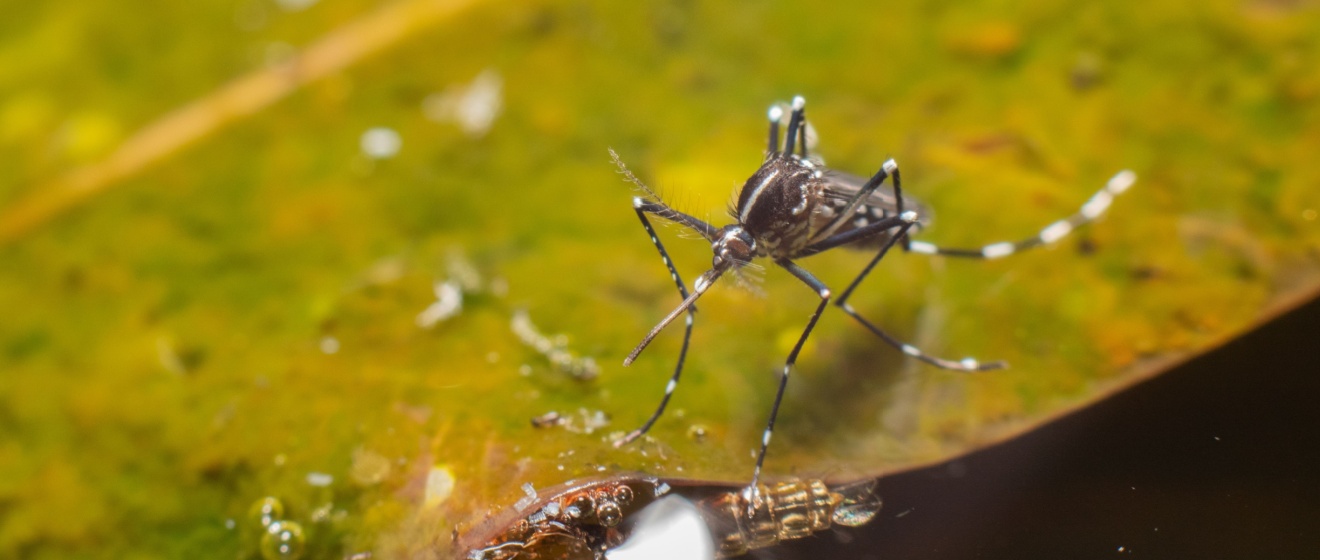
Wilson County residents often notice that mosquito activity spikes within days of a heavy rain, and there is a clear reason behind the pattern. Rainfall fuels the mosquito life cycle by filling gutters, low spots, and containers with the standing water eggs need to hatch. Understanding the connection between rainfall and mosquitoes helps explain why mosquito control needs to account for local weather rather than a fixed calendar.
Rain Creates New Breeding Sites Almost Immediately
Mosquito eggs need standing water to hatch, and rainfall supplies that water in places homeowners rarely check. A single storm can fill gutters, low spots in the yard, tarps, tire ruts, and forgotten containers with enough water to support a new generation of mosquitoes. In warm summer conditions, eggs can hatch and develop into biting adults in about a week, which means a Tuesday storm can translate into a noticeable increase in mosquito activity by the following weekend.
Consecutive Storms Compound the Problem
Wilson County’s summer weather pattern often brings repeated rounds of rain spaced just far enough apart to keep breeding sites full. As soon as one round of standing water starts to dry up, another storm refills it. This cycle can produce overlapping generations of mosquitoes throughout the summer, since new eggs are laid and hatched before earlier generations have finished their life cycle.
Drought Periods Can Also Increase Activity Near Certain Water Sources
While rain is the primary driver of new breeding sites, dry spells are not always a relief. During drought conditions, mosquitoes concentrate around any remaining water source, including creeks, drainage ditches, and ornamental ponds that hold water even when rainfall is scarce. This can create localized pockets of high mosquito activity even when overall rainfall is below average for the season.
Humidity Extends Mosquito Lifespan
Rain also raises humidity levels, which allows adult mosquitoes to survive longer between blood meals. Mosquitoes are vulnerable to drying out, and the moist air that follows a rainstorm helps them stay active and reproduce over a longer window than they would during a dry stretch. This is part of why mosquito activity in Wilson County tends to feel worse during a rainy summer than during one with less frequent storms.
Why Property-Level Drainage Is Important
Two properties that receive the same amount of rainfall can end up with very different mosquito problems depending on how well water drains. Yards with the following conditions tend to hold water longer after a storm and see higher mosquito activity as a result:
- Clogged or poorly sloped gutters
- Low areas in the lawn without proper grading
- Dense shade that slows evaporation
- Containers, tarps, or equipment left uncovered outdoors
Addressing these conditions reduces how much new breeding water a property retains after each storm, though it rarely eliminates the problem on its own, since rainfall and neighboring properties are outside a homeowner’s control.
What This Means for Treatment Timing
Because mosquito populations respond so quickly to rainfall, a treatment schedule based only on the calendar can miss the mark during an especially wet stretch of weather. Apple’s Environmental adjusts mosquito treatment based on actual Wilson County conditions rather than applying the same schedule regardless of recent rainfall, which helps keep barrier protection active during the weeks when breeding activity is highest.
If your property seems to see a surge in mosquitoes after every storm, that pattern is worth addressing directly rather than waiting it out. Contact us and our team can evaluate your yard’s drainage, identify sources of standing water, and build a treatment plan that accounts for Wilson County’s rain patterns.