
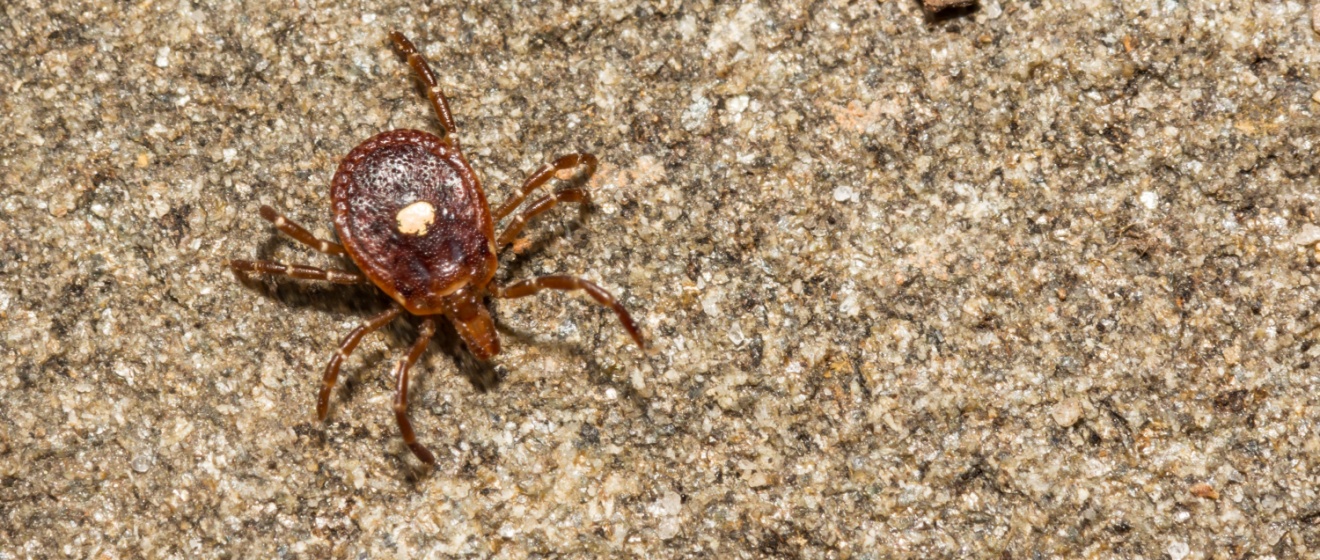
Three tick species account for nearly every tick encounter around Lebanon, Tennessee. Knowing what each one looks like, where it hides, and what it can transmit helps homeowners understand why year-round tick control is worth the investment.
American Dog Tick
The American dog tick is one of the most frequently encountered ticks in Wilson County. It has a reddish-brown body with pale, mottled markings on its back, and adult females carry a noticeably larger, lighter-colored shield behind the head. This species prefers open, grassy areas such as fields, trails, and lawn edges rather than deep woods. Adults are most active from April through June, and dogs and humans are among its preferred hosts. The American dog tick is associated with Rocky Mountain spotted fever and tularemia.
Lone Star Tick
The lone star tick is common throughout Middle Tennessee and is considered an aggressive hunter, moving toward a host rather than waiting passively on vegetation. Adult females are identified by a single white spot on their back, which gives the species its name. Lone star ticks are most active from spring through mid-summer and favor wooded edges, brushy areas, and shaded yards with heavy leaf litter. This species has been linked to ehrlichiosis, tularemia, and in some cases a red meat allergy known as alpha-gal syndrome.
Blacklegged Tick (Deer Tick)
The blacklegged tick, also called the deer tick, is the smallest of the three and can be easy to miss, especially in its nymph stage. It has a dark reddish-brown body and thin, dark legs. Blacklegged ticks are typically found in wooded areas, along trail edges, and in yards bordering forested land. They remain active later into the year than many other species, since they can tolerate cooler temperatures better. This tick is most closely associated with Lyme disease, along with several other tick-borne illnesses.
Where These Ticks Are Found Around Lebanon
All three species share certain habitat preferences that make Wilson County yards vulnerable:
- Overgrown lawns
- Wooded property lines and tree lines
- Leaf litter, brush piles, and stacked firewood
- Areas frequented by deer, raccoons, or other wildlife
- Shaded, humid spots that stay cool during the day
Ticks wait on grass and low vegetation for a host to brush past, then climb aboard and search for a place to attach. Because of this behavior, a property does not need to border thick woods to have a tick problem. A shaded flower bed, an overgrown fence line, or a shady spot near a shed can hold ticks just as easily as a wooded lot.
Why Identification Is Important
Each species carries a different set of risks and tends to favor slightly different conditions, so a treatment plan built around one tick may not address another effectively. Understanding which species are present on a property helps guide where and how treatment should be applied, rather than relying on a single, generic approach.
Apple’s Environmental has served Lebanon and the surrounding Wilson County area since the early 1990s, and our technicians are trained to identify these species and target the specific conditions that allow them to thrive on a property. If ticks have been spotted on your pets, your family, or around your yard, our team can inspect the property and recommend a treatment plan suited to what is actually present. Contact us to schedule an inspection.