Stinging insect species around a Lebanon home behave differently, and knowing which one has moved in changes how a nest should be handled. Paper wasps, yellowjackets, and two distinct types of hornets each show up regularly in Wilson County, and each comes with its own nesting habits and level of risk, which is why stinging insect control starts with correct identification.
Paper Wasps
Paper wasps are among the most frequently seen stinging insects in Middle Tennessee. They have slender, brownish bodies with reddish or yellow markings and long legs that hang down noticeably during flight. Paper wasps build open, umbrella-shaped nests made from a papery pulp of chewed wood and saliva, typically attaching them under eaves, porch ceilings, railings, and other sheltered overhangs. Compared to yellowjackets, paper wasps are generally less aggressive and tend to sting only when their nest is directly disturbed, but a nest near a doorway or frequently used outdoor space still poses a real risk.
Yellowjackets
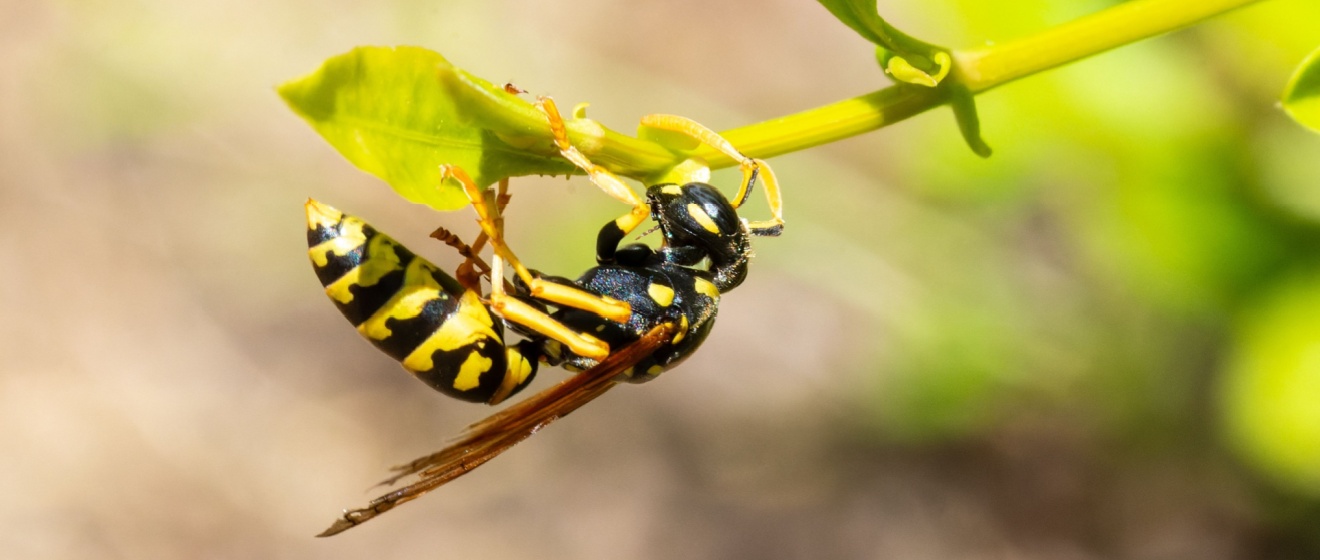
Yellowjackets are smaller and stockier than paper wasps, with bold black and yellow banding and a shinier, less hairy body. Several yellowjacket species are found in Tennessee, and most build enclosed nests in ground cavities, hollow logs, or wall voids rather than the exposed nests paper wasps prefer. Because these nests are often hidden underground or inside a structure, they can go unnoticed until someone accidentally disturbs one while mowing the lawn or doing yard work. Yellowjackets are considered one of the more defensive stinging insects in the region and will aggressively protect a nest once it has been disturbed.
Bald-Faced Hornets
Despite the name, bald-faced hornets are technically a type of yellowjacket rather than a true hornet. They are easy to identify by their black bodies and ivory-white markings on the face and the tip of the abdomen. Bald-faced hornets build large, gray, teardrop-shaped paper nests, usually attached to tree branches, shrubs, or the eaves of a home, and a mature nest can grow to the size of a basketball or larger by late summer. These insects defend their nests aggressively and can sting repeatedly, which makes a nest near a walkway or patio a significant concern.
European Hornets
The European hornet is the only true hornet found in Tennessee and the largest stinging insect on this list, with workers reaching close to an inch in length. It has a reddish-brown head and thorax with a yellow abdomen marked by brown, teardrop-shaped stripes, giving it a noticeably different look from the sharp black-and-yellow banding of yellowjackets. European hornets typically nest in hollow trees, wall voids, or abandoned structures, and unlike most other stinging insects in the area, they are known to remain active after dark.
Why Identification Changes the Approach
A ground-nesting yellowjacket colony, an aerial bald-faced hornet nest, and a paper wasp nest under a porch eave each call for a different removal strategy, and misjudging which species is present can lead to an incomplete treatment or an unnecessary risk of stings. Apple’s Environmental technicians identify the species on-site before treating a nest, which allows the right method to be used the first time.
If you have noticed wasp or hornet activity around your Lebanon home, a nest rarely resolves on its own and often grows larger and more defensive over the course of a season. Request a free quote and our team will identify the species involved and recommend a safe, effective removal plan for your property.