
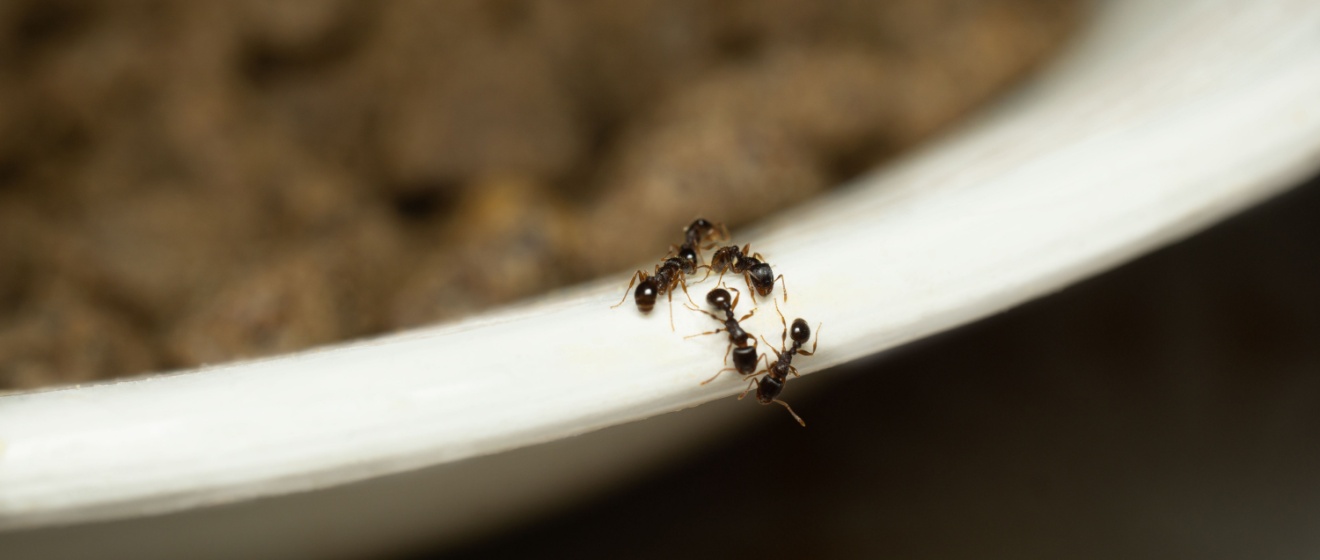
Ants in the kitchen are one of the most common pest complaints in Lebanon—and one of the most confusing, because the trail often has nothing to do with food. Homeowners who keep a clean kitchen and still find ants trailing along the backsplash or circling the faucet every morning are dealing with a colony that is responding to something other than crumbs. Here is what is actually drawing ants into your Lebanon kitchen and why the problem persists regardless of how often you clean.
They Are After Water
This is the realization that changes how most Lebanon homeowners think about their ant problem. In Middle Tennessee’s warm climate, water is often a stronger attractant than food—particularly during hot summer months when outdoor moisture conditions shift.
Look at where the ants are trailing. If they are heading to the sink, the faucet, the dishwasher connection, or the pipes under the sink, they are seeking moisture. A dripping faucet, condensation on cold water pipes, the rubber gasket around the dishwasher door, and standing water in a plant saucer on the windowsill are all reliable water sources for an ant colony that is nesting in the soil a few feet from your foundation.
You can scrub the counter until it gleams, and the ants will return—because the counter was never the attraction. The plumbing was.
The Colony Is Outside—But Close
Every ant trail in your kitchen originates from a colony living in the soil near your foundation, under your driveway, in the mulch bed adjacent to the kitchen wall, or under the patio slab. The foragers you see are a small fraction of a colony that may number in the tens of thousands. The queen, the brood, and the majority of workers are outside, and the colony produces new foragers continuously.
When a scout finds a reliable resource – your kitchen sink – it lays a pheromone trail back to the colony that recruits hundreds of additional workers to follow the same path. That pheromone signal is durable. Even after you wipe the counter with soap, enough residual chemical trace remains for new foragers to find the general area and re-establish the trail within hours.
Why Spraying Makes It Worse
Consumer repellent sprays kill the ants they contact and leave a chemical residue that surviving ants detect and avoid. They do not walk through it. They reroute, finding a different crack, a different gap, a different path into the kitchen. The colony is unaffected. The queen keeps producing workers. And with some ant species common in Middle Tennessee, repellent exposure causes the colony to fragment and establish new nesting sites, producing activity from multiple new locations.
What Stops the Cycle
- Fix the moisture attractant: Repair dripping faucets. Insulate cold water pipes under the sink to prevent condensation. Wipe down the sink basin before bed. Eliminate standing water on the counter and windowsills.
- Professional colony-elimination treatment: Non-repellent products that foragers carry back to the nest, spreading through the colony via contact and food sharing, reaching the queen over one to three weeks. The colony collapses from within. This method is not available in consumer form.
- Exterior barrier treatment: A professional-grade 3-zone barrier around the foundation intercepts foragers before they reach the kitchen. Apple’s Environmental’s Pest 365 plan treats up to 9 feet out from the foundation—covering the nesting zone where most ant colonies establish themselves.
- Recurring service: In Lebanon’s climate, where warm soil and regular rainfall sustain ant colonies for most of the year, one-time treatment provides temporary relief. Quarterly service maintains the barrier and catches new colony activity before it reaches the interior.
If ants keep appearing in your Lebanon kitchen despite your best efforts, contact Apple’s Environmental for a free estimate.